

Answers to the age-old question, "What is a ghost?"
What are ghosts? Of course, it is well known that many believe ghosts to be the disembodied spirits of humans and animals that once walked the face of this Earth, while others believe ghosts to be some sort of unintelligible energy imprint that has remained imprisoned upon our environment. Some believe ghosts to be demons while others do not believe in ghosts at all. One day, scientists may be able to prove just what ghosts are; but today, we only have the experiences and experiments from which to draw some conclusions.
Many people have seen ghosts over time, yet science today has yet to answer the question, “What are ghosts?” So, what exactly are ghosts? Could some ghosts possibly be the power of the human mind projecting forth apparitions of loved ones? Are ghosts, people trapped in our earthly world, wandering spirits who are struggling in a temporary hell, being unable to move beyond the past? Or, are ghosts simply rare glimpses of the past that replay within the physical environment, being seen only sparingly?
The reason we struggle with identifying the exact nature of ghosts is due to a lack of conclusive evidence. No one has yet been able to capture scientific, definitive proof that ghosts do indeed exist, or put forth a provable explanation as to why ghosts exist. Until this occurs, ghosts will remain the stuff of legend and lore.
What are Ghosts According to Skeptics?
The problem with proving ghosts exist is that skeptics suggest human perception is faulty, that only scientific means will ever authenticate the existence of ghosts. Many ghostly phenomena can be explained, they say, such as noises, mists, orbs, changes in air pressure, the effects of infrasonic frequencies, suggestion, etc. Have those of us who believe in ghosts been fooled by our five senses? In some cases, it would seem that is a distinct possibility when considering ghosts and the lack of hard evidence.
Still, should we throw the baby out with the bath water when considering the idea that perhaps our spirit lives on? In other words, should we be closed-minded? One should think not; for to decide something doesn't exist, based upon a lack of scientific proof, is not any better than believing something does exist based upon little evidence. For each person the paranormal, in this case ghosts, must be answered on the individual level. The idea of ghosts, therefore, is a personal journey. That means you may need to immerse yourself into the paranormal to have some experiences.
What are Ghosts? There is Strong Evidence to Consider.
The evidence for ghosts is indeed overwhelming. When one takes a step back and decides to look throughout history for accounts of ghosts, it is easy to see that many have witnessed them. And, some of the stories of ghosts come from multiple witnesses who saw the same thing at the same time – together. Could two minds be fooled into seeing the same thing at the same exact time? Not likely, it would seem, though some skeptics would argue it was possibly the power of suggestion at work. But what about the sightings of the same ghost seen at different times but in the same place by different people? And ghosts and haunting are found throughout the world. Stories of ghosts abound, which suggests that it is likely impossible that everyone who has ever had an experience with ghosts has been duped by their own mind and senses.
Interestingly, ghosts are no respecter of persons, for ghosts have been witnessed who are both famous and unknown. Celebrities of old and the modern-era have been reported haunting former haunts, with some being quite interactive with witnesses. Even odder are the sightings of inanimate ghost objects, such as planes, cars and buildings by several witnesses. Are these ghosts, too? What about the repeated sounds of ghost voices, gunfire, cannons, trains and other noises from the past that are heard in haunted locations by a myriad of witnesses over time? What explanation can be found for them, if not residual energy being released? Is there an unknown trigger for each ghost sighting that causes it to appear to people? Many believe that such a thing as time-slips occur, where past events that happened in a particular place continue to occur, but in another dimension. This is definitely an idea that could explain some ghosts. Still, many questions remain concerning ghosts and different types of haunting.
 There are other ghosts that cannot be explained away by theories of residual haunting, or time-slips. These ghosts are interactive with people, not only being seen, but heard, felt and communicative, being definitely different than some past event re-running over and over before spectators. Such ghosts are not chain-rattling spectres as Charles Dickens' A Christmas Carol artfully imagined, but are intriguing stories of human experience revealing an array of interesting haunting phenomena. It has been the hope of sharing evidence we receive that perhaps a greater understanding of ghosts can be gleaned. Many a ghost seems to be interacting with humans in order to gain attention, aid or simply for personal enjoyment. Some ghosts are downright loving, while others are mean-spirited. But, isn't that what the sea of humanity is, a pool of different personalities? So, why should the personalities (and reasons for ghosts remaining behind with the living) be any different?
Most ghosts appear to be hurting people who are trapped in the past, having not moved on in their life-journey. This journey continues, from what we have deduced, through heading toward the light after death. Ghosts sometimes seem to be aware of this light, but have not gone forward through it for a variety of reasons. Ghosts may remain behind unwittingly, due to being lost, while others seem to be looking for resolution. Maybe, a ghost needs acknowledged that he or she is alive, or there could be a message that needs to be delivered from the ghost to another living soul. Other ghosts, we have found, remained behind to watch over loved ones or former residences, while some ghosts were afraid to move on due to fear of being punished by an angry god, family or enemies they had made in the past. Whatever the reason, such lost human souls are truly in need of help, encouragement and enlightenment. Know that ghosts have been described in all shapes, sizes, ages, sexes and ethnicities: as people.
The father of modern analytical psychology, Carl Jung, after all his work and studies of the human mind was forced to believe in ghosts and spirits when he wrote this: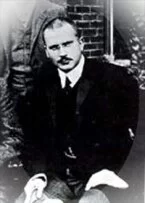
“I once discussed the proof of identity for a long time with a friend of William James, Professor Hyslop in New York. He admitted that all things considered, all these metaphysic phenomena could be explained better by hypothesis of spirits than by qualities and peculiarities of the unconscious. And here, on the basis of my own experience, I am bound to concede he is right. In each individual case I must of necessity be skeptical, but in the long run I have to admit that the spirit hypothesis yields better results in practice than any other.”
It is not foolish to believe in the existence of ghosts. Though cultures vary, most hold beliefs in ghosts. The very idea of ghosts rests upon our hope, our trust in our own soul being immortal. In China, for example, the dead (ghosts and spirits) are understood as co-existing with the living. One's ancestors are honored. In South America, the Day of the Dead is a festival also honoring those who have passed, but still co-exist with us – ghosts, if you will. In the Far East, many believe that this life transcends into the next and there is never any loss. Therefore, the spirit or essence of a person lives on and on. There are many, many more examples of beliefs in ghosts and spirits found throughout many cultures and religions of the world (See Ghosts & Religion).
To look at ghosts further, we should perhaps understand that each of us has an etheric body – the spirit energy that animates and co-exists with the physical form. It is the real person, the eternal essence of the individual, being a part of one energy source. This spirit energy is what is seen when ghosts are visibly witnessed as apparitions. Out-of-body experiences and near-death-experiences both seem to confirm this idea. This spirit energy is comprised of sub-atomic matter, which is why it is currently undetectable by scientists. It has been believed for thousands of years that this spirit-energy body is connected with the physical body by way of what's been dubbed “the silver cord.” When this cord is severed, much like cutting an electrical appliance cord, the body's life source has been removed and it can no longer survive. Yet, the etheric body is still very much alive and well, just as ghosts would indicate.
Is There a Difference Between Ghosts and Spirits?
At this point, while reading this article, one might be wondering what the difference is between ghosts and spirits? Simply stated, we believe that a ghost is a spirit that has not yet gone to the light. The light is a cleansing process with a life-review, which from what we can deduce, acts as a time of reconciling with the past. Fear is always connected to the past and blocks the way to our future. By removing the past fears, the spirit of a person is able to move on in the life-journey and leave the old, earthly life behind. This is not to say that a spirit of a person cannot visit loved ones here on Earth, but suggests that a brand new perspective is gained of seeing not only the past, but the present and the future, as well. This is quite a healing change of mind.
The future of our understanding of ghosts will undoubtedly be advanced and supported by what is to come in the modern-era. Quantum physics is already putting forth theories that will coincide and explain not only ghosts, but the existence of what has long been difficult to perceive: the invisible, realm of Spirit.
More Reading...
Ghost Theories
8 Classifications of Ghosts
Ghost Rescue
How to Get Rid Of Ghosts
Ghosts & Haunting
What Are Ghosts Made Of?