
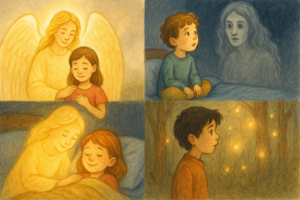
Children come into the world wide open—emotionally, mentally, and spiritually. Most parents notice it in those early years: kids feel things deeply, see meaning in everything, ask unusual questions, and sometimes describe experiences that adults brush off as imagination. Yet on angelsghosts.com/, thousands of people have shared stories from their childhood—moments when they saw an angel, sensed a presence, or knew something without being told. These stories show a pattern: spiritual development in children begins naturally long before adults even think to name it.
This article explores what that development looks like, why kids are so tuned in, and how parents can support them without fear or forcing religion. Whether a child talks about an angel, a ghost, a dream that felt “too real,” or a feeling of being watched over, these moments are part of how they understand themselves and the world.
Let’s go step by step.
Why Children Are Naturally Spiritual
Most kids don’t have the walls adults build over time:
- They haven’t been told what is “real” and what isn’t.
- They haven’t layered fear over things they don’t understand.
- They don’t start with skepticism.
- They communicate honestly and directly.
Many adults on your site describe seeing an angel or spirit at age 4, 6, or 10—then shutting it down later in life because “grown-ups said that doesn’t happen.” The interesting part? Nearly all of them remember the moment vividly decades later. Childhood is the window where awareness is most open.
Children rely on senses adults underuse. They notice subtle energy shifts, moods, the feeling of being protected, or the feeling that something was near them at night. That’s not “weird.” That’s development.
In spiritual development in children, the early years aren’t about religion—they’re about sensitivity, connection, and emotional truth. Kids ask the big questions long before parents expect:
- “Where do people go when they die?”
- “Why did I feel something touch my shoulder?”
- “Why did Grandpa visit me in my dream?”
- “Why did I know you were sad before you said anything?”
- “Who was that glowing person in my room?”
Forcing answers on them risks shutting down their natural process. Supporting them creates confidence and trust.
Signs of Spiritual Development in Children
Spiritual development in children usually appears in simple, everyday ways:
1. Intuitive Knowing
They know a visitor will show up before the doorbell rings
They predict conversations
They sense when someone is hurting
2. Heightened Empathy
Kids absorb the emotions in a room. They feel others’ pain almost physically. This is one of the earliest signs of spiritual sensitivity—not weakness.
3. Dreams That Feel More Like Visits
On angelsghosts.com/, countless true encounters begin with childhood dream-visits:
A grandmother appearing to say goodbye
A glowing figure standing at the end of the bed
A voice saying “Wake up now” before a danger
Kids often say: “It felt real.”
That’s because to them, it is.
4. Talking to Someone Who Isn’t Physically There
This can happen during play or quiet moments. Many parents later discover the child was naming a deceased relative they had never met.
5. Sensing Presences
This might be described as:
- “Someone in my room”
- “A shadow that wasn’t scary”
- “A warm light”
- “A person standing near me”
This is the core category of many ghost and angel stories visitors have shared.
6. Asking Deep, Philosophical Questions
Kids ask about souls, death, protection, purpose, dreams, and unseen things. These questions often start spontaneously.
7. Feeling Energies
Kids talk about “heavy rooms,” “happy places,” or feeling “safe” in one part of the house but not another.
They sense energy before they understand it.
Why Kids See Angels and Spirits More Than Adults
Adults on your site often say, “I saw this when I was little, but not anymore.” Why?
Children live in a natural meditation state called theta brainwaves—the same state used in hypnosis, creativity, and deep spiritual insight. Their minds are relaxed, open, and less filtered.
They also haven’t been trained to doubt themselves yet.
Many childhood angel or ghost experiences fall into these categories:
▶ Protection Moments
A child being warned before a danger
A bright figure waking a child during a house fire
A voice telling them to stop or move
These appear again and again in your collection of real stories.
▶ Comfort Moments
A deceased family member visiting
A child seeing a glowing figure during grief
Children describing “kind lights” or “nice shadows”
▶ Curiosity Moments
Seeing something they don’t fear
Touching energy or light
Describing shapes or people adults can’t see
Kids rarely attach fear unless adults teach them fear.
How Parents Can Support Spiritual Development in Children
Children don’t need to be pushed toward spirituality. They need space, language, and reassurance. Here’s how.
1. Listen Without Jumping In
If a child says, “I saw a man in my room,” the parent doesn’t need to respond with:
❌ “You imagined it.”
❌ “Ghosts aren’t real.”
❌ “That’s scary; don’t talk about it.”
Instead try:
✔ “What did he look like?”
✔ “How did you feel?”
✔ “What do you think it was?”
Let the child lead. You’re there to guide, not force.
2. Validate Feelings, Not the Supernatural Claim
You don’t have to confirm or deny anything. Just hold the space. That alone boosts a child’s spiritual confidence.
Example:
“You felt something warm and protective—thank you for telling me.”
3. Teach Children to Trust Their Inner Compass
Kids don’t need mystical language. They need grounding.
Simple guidance works:
- “If something feels good, it’s okay to relax.”
- “If something feels uncomfortable, tell me.”
- “You can ask the feeling to leave.”
- “You are safe in this house.”
This gives them control instead of fear.
4. Encourage Journaling
This is where your Angels & Ghosts printable journals shine.
A child who records:
- Dreams
- Strange moments
- Angel feelings
- Energy experiences
- Intuition
develops self-awareness and pattern recognition.
This builds their spiritual foundation early.
5. Use Stories to Teach Without Scaring
Your website has hundreds of powerful children’s encounters. Parents can use these stories in two ways:
Calming:
When kids feel alone or confused, reading a kind angel story helps them feel normal.
Normalising:
When kids feel “different,” knowing others experienced similar things helps them feel grounded.
Activity building:
Kids love turning stories into drawings, maps, or “detective” clues.
6. Teach Boundaries (Yes, Even Spiritually)
Kids can learn:
- “No visitors at bedtime.”
- “Only light and kind energy is allowed near me.”
- “I can tell anything scary to go away.”
This gives them emotional—and spiritual—security.
7. Stay Neutral About Fear
Children adopt YOUR reaction.
If you panic, they panic.
If you shame them, they hide the experience.
If you stay calm, they stay open and balanced.
Parents don’t need answers. They just need presence.
How Angel & Ghost Experiences Help Spiritual Development
When viewed properly, these experiences help children learn three things:
1. They Learn They’re Not Alone
Many real stories on your site describe a child seeing an angel or a kind presence during fear, illness, or loneliness. Kids interpret this as protection, not fear.
2. They Learn to Trust Their Intuition
Experiencing something beyond the five senses teaches children that they have inner resources.
They learn to:
- listen
- reflect
- trust feelings
- notice subtle energy
This is the foundation of spiritual development in children.
3. They Learn About Life, Death, and Connection
Kids who have spiritual experiences often become more empathetic and thoughtful. They understand the world is bigger than they can see. This leads to emotional maturity far earlier than most adults expect.
Activities to Support Your Child’s Spiritual Development
Perfect for your Activity Builder box.
● The Energy Hands Exercise
Kids rub hands together, pull them apart slowly, and describe the “tingle” or “magnetic stretch.”
Teaches awareness of subtle energy.
● Angel Memory Drawing
After telling a story (from your pages), ask:
“What did the angel or presence look like in your imagination?”
Let them draw freely.
● The Nighttime Light Practice
Kids imagine a warm protective light around their bed.
Good for reducing fear.
● Spirit Detective Notes
Kids record:
- noises
- feelings
- dreams
- odd moments
without judgment.
● Ask the Room
Let the child ask:
“How does this room feel today?”
Encourages intuitive awareness.
How Parents Can Tell If Their Child Is Overwhelmed
Spiritual development should feel calm.
If a child is:
- anxious
- afraid to sleep
- obsessed
- confused
- seeing frightening images
the parent should bring everything back to grounding—routine, journaling, safety, and gentle conversation.
Children rarely get overwhelmed unless adults project fear onto the experience.
How to Talk About Death, Angels, and Ghosts Without Causing Fear
Here’s a balanced approach parents can use:
“Some people believe we are energy. When we die, that energy changes form. Some kids feel that energy more than others. Angels are a name people use for helpful energy. Ghosts can be leftover feelings or memories. None of it can hurt you.”
It keeps things neutral and safe.
What Spiritual Development Looks Like as Kids Grow Older
The spiritual stages usually look like:
Ages 3–6:
Imagination + sensitivity + symbolic thinking
Often the age of the strongest angel/ghost encounters
Ages 7–10:
Logic increases, but intuition stays strong
Kids ask deeper questions
Ages 11–14:
Identity-building
Kids either open further or shut down, depending on parent support
Teen years:
Reevaluation
Dreams, intuition, and emotional intelligence resurface
Your printable journals, story activities, and mystery kits fit each stage.