
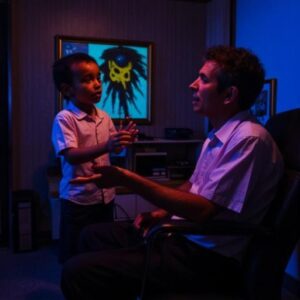
Psychic child experiences are far more common than most parents expect. They often appear quietly, without drama, and usually through simple comments or behaviours that are easy to dismiss at first. A child might talk about knowing something before it happens, sensing someone’s feelings without being told, seeing light or shapes others cannot see, or dreaming events that later occur.
These experiences don’t arrive with labels. Children rarely say “I’m psychic.” Instead, they speak in everyday language, describing what they notice, feel, or sense. For parents, this can be confusing, especially in a world where these topics are often mocked, sensationalised, or framed as something to fear.
This article explains psychic child experiences in a grounded, practical way, based on long-standing patterns seen in real family stories involving angels, spirits, and intuitive awareness. The goal is not to define beliefs, but to help parents understand what is happening, what is normal, and how children typically process these experiences.
What Are Psychic Child Experiences?
Psychic child experiences refer to moments when a child perceives information beyond ordinary sensory input. This does not mean constant visions or dramatic predictions. In most cases, it shows up as:
- Strong intuition
- Emotional sensitivity
- Accurate feelings about people or situations
- Vivid dreams with meaning
- Awareness of unseen presences
- Sudden knowing without explanation
Children experience these moments naturally. They are not trying to prove anything, and they are not seeking attention. Many don’t even realise their experiences are unusual until an adult reacts strongly.
Why Psychic Experiences Are More Common in Children
Children are neurologically and emotionally different from adults. Their brains are still developing filters that separate imagination, intuition, memory, and perception. This openness allows them to notice subtle signals that adults often ignore or rationalise away.
Several factors make children more receptive:
- They live in the present moment
- They are emotionally honest
- They trust internal sensations
- They have not been conditioned to dismiss unusual perceptions
- They are less attached to fixed explanations
This openness doesn’t mean every experience is literal or external. Some experiences are symbolic, emotional, or intuitive rather than visual or audible. What matters most is how the child understands and reacts to what they sense.
Common Types of Psychic Child Experiences
Psychic experiences in children tend to fall into repeating categories. Many children experience more than one type.
1. Knowing Things Before They Happen
Some children demonstrate accurate anticipation without being told anything. This may include:
- Predicting phone calls or visitors
- Saying something bad or good will happen shortly before it does
- Feeling uneasy before unexpected news
- Knowing where an object is without searching
These moments are usually brief and casual. The child often moves on quickly, unaware that what they said was unusual.
2. Emotional Awareness Beyond Their Age
Emotionally intuitive children sense what others are feeling even when nothing is said. They may:
- Become upset when someone nearby is anxious
- Comfort adults without being prompted
- Avoid people who later prove untrustworthy
- React strongly to conflict, even when hidden
Parents often mistake this for oversensitivity, when in reality the child is processing emotional information others are suppressing.
3. Seeing Light, Shadows, or Shapes
Some children describe visual perceptions that don’t align with physical reality, such as:
- Light around people
- Moving shapes in rooms
- Shadows that don’t feel threatening
- Glowing figures or outlines
These experiences are usually calm rather than frightening. Fear tends to arise only when adults react with alarm or disbelief.
4. Dreams That Feel Meaningful or Predictive
Dream-based experiences are among the most common psychic expressions in children. These may include:
- Repeating dreams with consistent themes
- Dreams involving relatives who have passed
- Dreams that later match real events
- Dreams that leave strong emotional impressions
Children may struggle to explain why these dreams feel important, but they often insist they are different from ordinary dreams.
5. Awareness of Spirits or Presences
Some children speak about feeling someone nearby when no one is visible. This might sound like:
- “Someone is standing there”
- “The room feels full”
- “They’re watching me but not in a bad way”
In many long-term family accounts, these presences are described as familiar, protective, or neutral rather than frightening.
6. Strong Connection to Animals and Nature
Children with psychic sensitivity often bond deeply with animals and natural environments. They may:
- Communicate emotionally with pets
- Sense when animals are distressed
- Feel calm outdoors but restless indoors
- Prefer quiet natural spaces over stimulation
Nature provides grounding for children whose perception is already heightened.
How Children Interpret Psychic Experiences
Children do not analyse experiences the way adults do. They interpret them emotionally first, logically second. A child is more likely to say “It felt nice” or “It felt wrong” than to explain what they saw or heard.
Younger children often express experiences through:
- Drawings
- Play
- Stories
- Simple statements
Older children may become more private, especially if they sense adults are uncomfortable or dismissive.
When children feel believed and safe, they tend to remain calm about their experiences. When they feel doubted or ridiculed, anxiety often increases.
What Psychic Experiences Are NOT
It’s important to clarify what these experiences usually are not:
- They are not signs of mental illness
- They are not dangerous by default
- They are not always literal
- They do not mean a child is special or superior
- They are not something parents must fully explain
Most psychic child experiences are brief, developmental, and integrated naturally when handled calmly.
The Parent’s Role During Psychic Experiences
A parent’s response shapes how a child relates to their experiences long-term.
Helpful responses include:
- Listening without interruption
- Staying emotionally neutral
- Asking open, simple questions
- Acknowledging the child’s feelings
- Avoiding dramatic interpretations
Unhelpful responses include:
- Immediate dismissal
- Fear-based reactions
- Over-analysis
- Forcing explanations
- Treating the experience as entertainment
Children don’t need answers as much as they need safety and trust.
Boundaries Matter for Sensitive Children
Children with psychic awareness still need structure and boundaries. Clear routines, especially around sleep, reduce overwhelm.
Simple boundary practices include:
- Predictable bedtimes
- Night lights if needed
- Calm evening routines
- Clear reassurance that their space is safe
- Permission to say no to uncomfortable sensations
These practices help children feel in control rather than overwhelmed.
Why Some Children Grow Out of Psychic Experiences
Many children experience heightened sensitivity between ages 3 and 9. As reasoning skills develop, these experiences may fade or change form.
Growing out of experiences does not mean they were imaginary. It usually means the child has learned to process perception differently as their brain matures.
Some children retain intuitive abilities into adulthood, while others integrate them quietly into emotional intelligence, creativity, or empathy.
When Extra Support May Be Needed
While most psychic child experiences are harmless, additional support can be helpful if a child:
- Experiences ongoing fear
- Has persistent sleep disruption
- Withdraws socially
- Becomes distressed by experiences
- Expresses confusion they cannot manage
Support does not mean suppressing experiences. It means helping the child regulate emotions and feel secure.
A Long-Term Perspective for Parents
Children who experience psychic awareness often grow into adults who are:
- Emotionally perceptive
- Compassionate
- Creative
- Intuitive decision-makers
- Calm in crisis situations
These traits can become strengths when supported early.
The most consistent pattern seen in real family accounts is simple:
children do best when their experiences are neither exaggerated nor dismissed.
Closing Thoughts for Parents
Psychic child experiences don’t require belief systems, labels, or explanations. They require calm adults, stable routines, and emotional safety.
You don’t need to define what your child is experiencing. You only need to make sure they know they can talk to you without fear, shame, or ridicule.
Children interpret the world through how adults respond to it. When parents stay steady, children learn that their inner experiences are manageable, understandable, and not something to fear.
That foundation matters far more than any explanation ever could.