
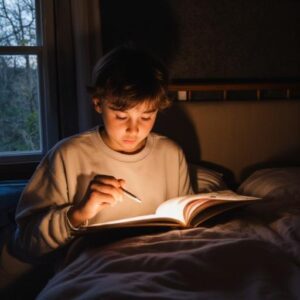
Parents searching for spiritual books for children are rarely looking for doctrine, belief systems, or heavy explanations. Most are looking for reassurance, calm language, and ways to help a child make sense of experiences that feel bigger than words.
On angelsghosts.com/, many of the real stories shared by parents include a similar moment:
a child asking a question that doesn’t fit neatly into everyday conversation.
Questions like:
- “Why did I see a light when I was scared?”
- “Who was the person in my dream?”
- “Why do I feel other people’s feelings?”
- “Where do people go when they die?”
Books often become the safest entry point for these conversations — not because they provide answers, but because they give children language, symbols, and reassurance without pressure.
Why Spiritual Books Matter for Children
Children experience the world emotionally before they experience it logically. A well-chosen spiritual book does not tell a child what to believe. Instead, it helps them:
- Feel less alone in their experiences
- Understand emotions without fear
- Explore ideas like kindness, connection, intuition, and awareness
- Learn that questions are allowed
- Feel safe talking to parents about unusual thoughts or dreams
For spiritually sensitive children, books can reduce anxiety simply by showing that other children feel this way too.
What “Spiritual” Means in Children’s Books
For children, spirituality is not about belief systems. It’s about:
- Awareness
- Connection
- Feelings
- Curiosity
- Comfort
- Meaning
Spiritual books for children often explore themes such as:
- Inner calm
- Emotional understanding
- Empathy
- Imagination
- Life and loss
- Intuition
- Nature
- Dreams
The best books leave space for interpretation rather than delivering explanations.
Types of Spiritual Books for Children
Not all spiritual books serve the same purpose. Parents often find it helpful to choose books based on what their child is experiencing right now.
1. Books About Feelings and Inner Awareness
These books help children understand:
- Strong emotions
- Sensitivity
- Anxiety
- Empathy
They often use metaphors like weather, colors, animals, or light to explain feelings without labeling them as problems.
Best for children who:
- Feel overwhelmed easily
- Absorb other people’s emotions
- Struggle to explain how they feel
How parents can use them:
- Read together
- Pause and ask, “Does this ever feel like you?”
- Let the child lead the discussion
2. Books About Imagination, Light, and Inner Worlds
Many spiritually sensitive children describe seeing or sensing things that adults dismiss as imagination. Books in this category normalize inner worlds without encouraging fear.
They may include:
- Gentle light imagery
- Safe unseen helpers
- Dreamlike environments
- Calm nighttime settings
These books do not explain what the experience is — they simply allow it to exist.
Best for children who:
- Talk about lights, visitors, or presences
- Have vivid dreams
- Feel afraid at night
3. Books About Life, Death, and Continuity
Children often ask deep questions after loss, even if the loss is indirect. Spiritual books can help by presenting death as part of life without being frightening.
These books usually focus on:
- Love continuing
- Memory
- Nature cycles
- Connection beyond physical presence
Best for children who:
- Have lost a pet or relative
- Ask questions about death
- Speak about people who are no longer here
Parent note:
Avoid books that present certainty. Open-ended storytelling allows children to process at their own pace.
4. Books About Kindness, Empathy, and Connection
Some spiritual books are subtle. They don’t mention anything unseen at all — but they cultivate awareness.
These books often show:
- How actions affect others
- Emotional consequences
- Compassion
- Respect for differences
For many children, spirituality begins with how they treat others.
5. Books About Nature and Belonging
Nature-based spiritual books help children feel grounded and connected.
Common themes include:
- Trees and roots
- Animals as teachers
- Seasons and cycles
- Stillness
These books are especially helpful for children who feel overwhelmed in busy environments.
Choosing the Right Spiritual Book for Your Child
Rather than choosing by age alone, consider choosing by emotional stage.
Ask yourself:
- Is my child currently anxious, curious, grieving, or overwhelmed?
- Are they asking questions, or avoiding them?
- Do they prefer stories, pictures, or quiet reflection?
What to look for in a good spiritual book
- Calm, reassuring tone
- Open-ended language
- Soft imagery
- No fear-based messaging
- No pressure to interpret
- Respect for the child’s imagination
What to avoid
- Heavy explanations
- Moral lectures
- Fear-driven concepts
- Books that insist on one meaning
- Stories that invalidate feelings
Reading Spiritual Books Together: A Parent’s Role
A book alone is helpful. A book shared with a calm adult is powerful.
How to read spiritual books with children
- Let the child set the pace
- Don’t rush to explain
- Allow silence
- Accept unexpected questions
- Say “I don’t know” when needed
Often, the most important moment happens after the book ends.
Using Spiritual Books as Activities (Not Lessons)
Spiritual books pair naturally with gentle activities.
Simple follow-up activities
- Drawing a favorite scene
- Talking about feelings the story brought up
- Asking, “Which part felt important?”
- Journaling (for older kids)
- Sitting quietly together
These activities help children integrate what they read without turning it into a task.
Spiritual Books and Children Who Have Unusual Experiences
Many parents arrive at angelsghosts.com/ after their child has described something unexpected:
- A dream that felt real
- A presence at night
- A feeling they can’t explain
Spiritual books do not confirm or deny these experiences. Instead, they provide emotional safety.
A book that says “You are not strange for feeling this way” can be grounding for a child who feels different.
Books vs. Direct Explanation
Children often resist direct explanations, especially when adults try to rationalize experiences away.
Books work because:
- They speak sideways
- They use metaphor
- They allow imagination
- They avoid confrontation
For spiritually sensitive children, this indirect approach is often more effective than reassurance alone.
When a Child Re-Reads the Same Spiritual Book Repeatedly
This is common and meaningful.
Repetition often means:
- The child is processing something
- The story feels safe
- They are returning to a familiar emotional space
There is no need to redirect or replace the book quickly.
Spiritual Books Across Different Ages
Ages 3–6
- Simple imagery
- Gentle language
- Focus on safety and comfort
Ages 7–10
- Deeper emotions
- Symbolism
- Curiosity about meaning
Ages 11–14
- Identity
- Inner voice
- Personal values
- Quiet reflection
Older children may prefer journals, graphic stories, or short reflective texts rather than picture books.
Spiritual Books Are Not About Answers
The most important thing for parents to remember:
Spiritual books for children are not meant to explain the unseen.
They are meant to support the child while they explore it themselves.
A good book leaves space.
A Calm Reminder for Parents
If your child is drawn to spiritual books, it doesn’t mean they are fragile, unusual, or destined for something specific.
It usually means they are:
- Thoughtful
- Emotionally aware
- Curious
- Sensitive to their inner world
Books are simply one way they learn to understand themselves.