

Can ghosts be found within the Hebrew religion? Judaism is full of spirits...
Judaism holds the traditional view that ghosts do exist but should not be consulted. The Hebrew word for ghost is ovoth, but a more profound and interesting Hebrew word for ghost is dybbuk. A dybbuk is a wandering soul that can possess or attach to a living person in an attempt to either live vicariously through the person, or control their body and actions to do their will. The word means "to cling" or "cleave," and amazingly, is not always viewed as a bad thing to have. Some within Judaism believe that not only can ghosts cling to another human being, but also, spirit guides who assist people on earth will also attach to people during those times.
Helping the Dybbuk
Stories of dybbuk have been collected and shared for centuries, if not longer, but these ghost stories rarely go into the detail of how to resolve problems with the human spirts. The document shown on this page, below, was discovered among a bevy of manuscripts stored near a Cairo synogogue and is the prayer used by a group of people who joined together to exorcise the dybbuk from a widow. Who was the ghost? The spirit was of her deceased husband who sought to maintain control over his wife. The prayer is said to respect the man, asking that after he leaves his wife that he reunite with his own soul (vital and rational) and spirit.
-
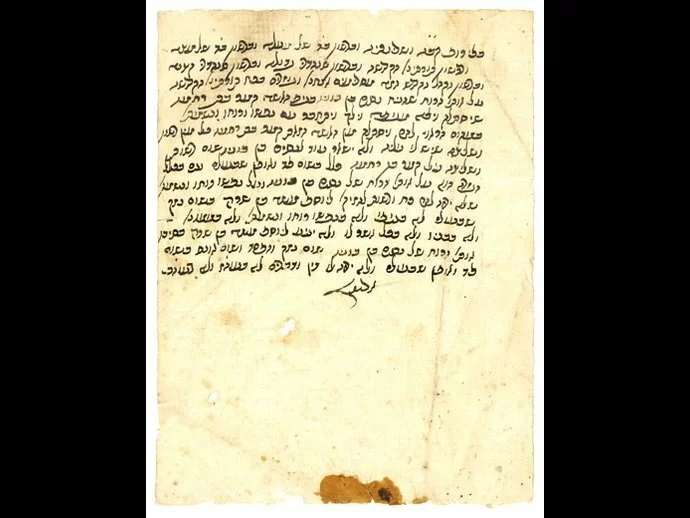
Jewish prayer of exorcism from the 18th or 19th century...
What About Demon Possession?
Judaism does not teach demon possession but that possession by ghosts is possible (same idea as attachment). This state of becoming "ghost possessed" is typically thought to be primarily sought out by ghosts who are suffering from unfinished earthly business. Ghosts are believed to be drawn to people who have similar desires, and suffering negatively, leaving their body and soul somewhat in dis-union, making it possible for the ghost to possess the host's body.
Many are not aware that ghost attachment and possession is in the Old Testament. Two occurrences are found in I Samuel 18:10, where King Saul is vexed by a bad spirit; and I Kings 22:20-23 where the prophets are possessed by the lying spirit of a man to trick the King into war. These passages are often misunderstood or misinterpreted within some Christian doctrines.
Jewish Exorcism
Some sects within Judaism still practice exorcisms through a ritual ministered by a rabbi, typically experienced in practical Kabbalah. The rituals may vary by practicioner. However, a common ritual is performed through the blowing of a shofar or trumpet. It is believed the sound will help separate the ghost from the possessed person's body, enough at least whereby communication with the ghost can take place. The Jewish ritual is designed to eventually help the ghost feel safe, and help the lost soul with whatever business that had been left unfinished. In this light, exorcism in Judaism seeks not only to heal the possessed but to also aid the ghost that is doing the possessing. Thus, exorcism is viewed as a healing practice for all involved.
Common exorcism practice typically includes questioning the dybbuk to determine the history and motive behind the attachment to aid in the removal process. Psalms and other Hebrew passages are also said to have been used for protection.